
Decision guide · 6 min read
Repair or replace a Sub-Zero in a historic Sonoma home
In Sonoma's historic adobes and Victorians, access and age complicate the repair-or-replace call. How we judge it on real readings, not a sales pitch.
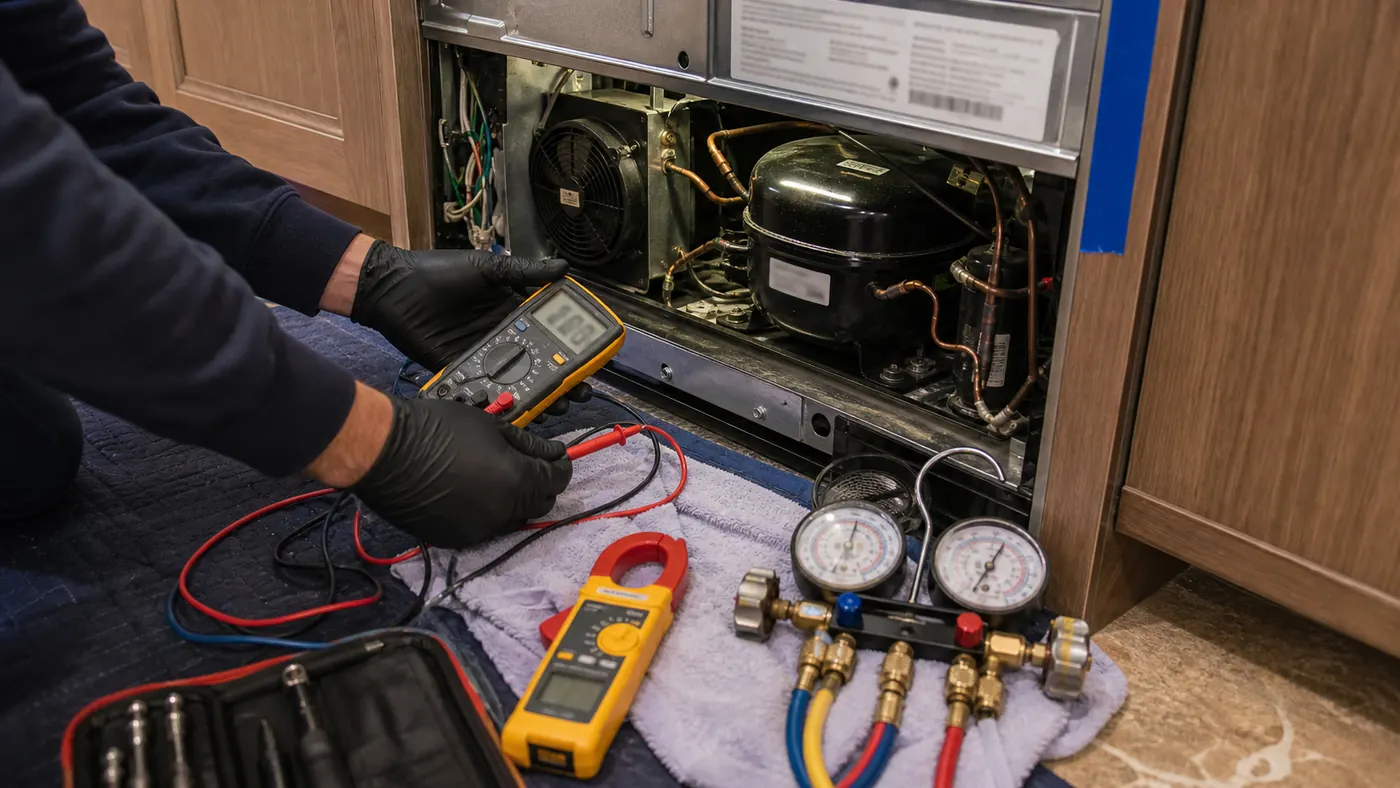
The honest answer to "should I fix it or replace it?" almost never comes from the brand or the age alone. It comes from the readings: what actually failed, whether the part is available, and what the rest of the system looks like.
In Sonoma that question carries an extra wrinkle, because so many of the kitchens we work in sit inside the historic adobes and Victorians around the plaza and Spain Street — places where pulling a heavy built-in column out for replacement is a real project on its own.
Why the house changes the math here
In a newer vineyard-estate kitchen on the valley floor, swapping a unit is straightforward. In a century-old adobe near the plaza it is not: tight doorways, original cabinetry built around the appliance, and floors you don't want to drag a 48-inch column across. That added cost and disruption of replacement is real, and it pushes the balance toward a sound repair more often than people expect.
Usually worth repairing
A failed evaporator fan, a tired door gasket, a clogged condenser, a control board, a fill valve or ice-maker module — these are bounded, well-stocked repairs on a unit that is otherwise sound. On a Sub-Zero built to run fifteen to twenty years, fixing one of these is almost always the right call, and far less invasive than removing the unit from a historic kitchen.
Where it gets closer
A sealed-system fault — a refrigerant leak or a failing compressor — is the expensive one. On a newer unit we put gauges on it, show you the pressures, and it is usually still worth repairing. On a much older unit with a loaded history we will show you the numbers and sometimes tell you it is time. We would rather lose the repair than sell you one that does not make sense.
How we keep it honest
Every recommendation starts with a diagnosis, not a guess: model and serial, temperatures, airflow, and electrical or sealed-system readings as needed. The $89 service call goes toward the repair, and you see the evidence the recommendation rests on before any work begins.
FAQ
Questions & answers
Does a 15-year-old Sub-Zero mean replace?
No. Age alone doesn't decide it — these units are built for the long run. What decides it is which part failed and what the sealed system reads, weighed against how disruptive a replacement would be in your kitchen.
Will you ever tell me to replace it?
Yes, when the numbers say so — typically a much older unit facing a major sealed-system repair. We show you the readings behind that call rather than guessing.
Go deeper
More Sonoma guides
How Long Do Sub-Zero Refrigerators Last in Sonoma? A Lifespan and Cost Guide
A Sub-Zero built-in lasts 20+ years. Which parts age first, gasket, condenser fan, sealed system, and the repair-vs-replace cost math for Sonoma's older units.
Read the guide → Second-Home Maintenance · 6 minClosing Up a Sonoma Wine-Country Home: Sub-Zero Shutdown and Return Checklist
Closing up a Sonoma wine-country home? How to shut a Sub-Zero down safely, guard old floors from a slow leak, and bring the built-in back when you return.
Read the guide → Maintenance guide · 6 minWhy a Sonoma dry-summer kitchen makes the condenser the first thing to clean
Late-summer valley heat, vineyard dust, and a kitchen running flat-out through crush gang up on a Sub-Zero condenser. Why slow cooling out here is so often dust — and how often to clean it.
Read the guide →After the proof
Rather leave it to a specialist?
Have the failing compartment, current temperatures, and model number ready, and you will get a real first opinion — not a sales pitch.