Wolf Troubleshooting · 3 min read
Wolf Stove Problems: 5 Symptoms, Safe Owner Checks and When to Stop
Wolf stove won't spark, light, hold a blue flame or heat the oven right? Five symptoms in the order they appear, safe owner checks and when to stop.
Most Wolf stove problems show up as one of 5 symptoms, in the order you meet them while cooking: no spark, a click without flame, a yellow or uneven flame, an oven that will not heat, and an oven that bakes hot or cold. Owners can safely check caps, ports and the breaker and run a 350°F thermometer test, while anything behind a panel or in the gas valve is technician work. The order holds for any Wolf range, including remodels near the 1840s Mexican-era adobes around Sonoma Plaza.
Why won't a Wolf burner spark at all?
A Wolf sealed burner that stays silent when the knob turns to Lite usually lacks power at the spark module. On most sealed-burner gas ranges, Wolf included, every electrode sparks together, so silence across all burners points to the breaker.
If the other Wolf burners click but one stays quiet, check that burner's electrode, the small ceramic post beside the base. Grease or a boil-over can short the spark; wipe the Wolf electrode clean and dry. A cracked insulator, or a silent spark module with good power, needs a technician.
What does it mean when a Wolf burner clicks but won't light?
Spark without flame means gas is not reaching the Wolf burner ports or is not catching. If no burner lights, check that the gas shutoff behind the range is open. If only one Wolf burner fails, the cap is often off-center, blocking ports.
Never let a Wolf igniter spark for long with gas flowing: if no flame appears within about 4 seconds, turn the knob off and wait 5 minutes before retrying. Repeated failures with a clean, seated cap point to the Wolf burner valve or orifice, which is technician work.
Is a yellow or uneven Wolf flame a problem?
A healthy Wolf burner flame is blue with crisp, even cones; a few orange flecks are normal. A tall, lazy yellow Wolf flame that soots pans means the air-to-gas mix is wrong, often after a propane conversion, and needs a technician.
Gaps in the Wolf flame ring, or a simmer flame that dies, usually mean clogged ports. With the burner cool, wash the cap in warm soapy water, clear each port with a straightened paper clip, never a toothpick, and dry everything fully. Wolf dual-stacked burners simmer on a small lower ring, so blocked lower ports show first at low settings.
Why is the Wolf oven slow to preheat or not heating?
A Wolf oven that will not heat, with a dark display, starts at the breaker: switch it off for 5 minutes to reset the control. A dual-fuel Wolf oven runs on a 240-volt double-pole breaker; if one side trips, the clock can stay lit while the elements stay cold.
With good power, watch the Wolf broil element during a broil test; a blister, break or bright spark calls for cutting the breaker and booking service. On an all-gas Wolf oven, a long delay before the bake burner lights, or a soft whoomp, signals a tired igniter or gas valve.
How can you tell if a Wolf oven bakes hot or cold?
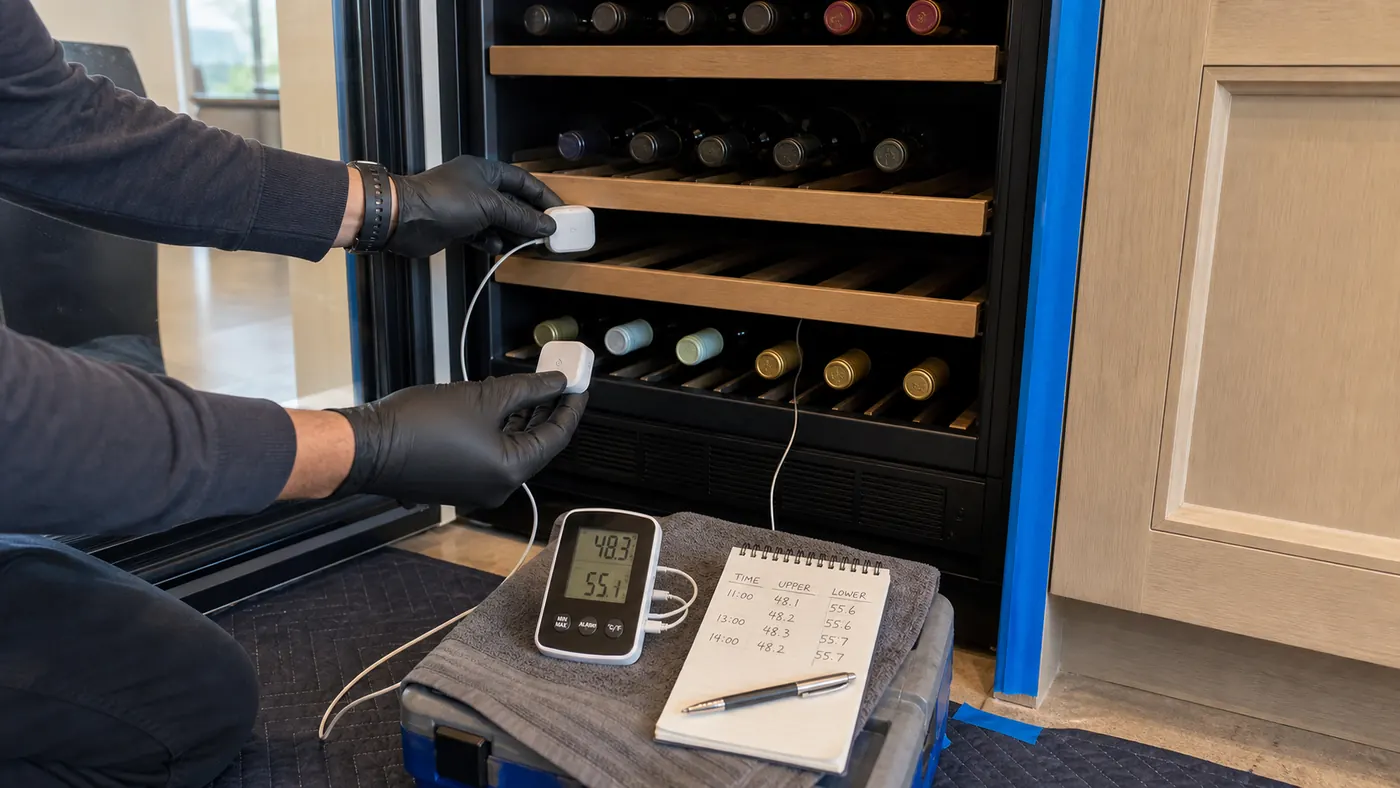
A Wolf oven that burns cookies needs a measurement before any part is blamed. Set an oven thermometer on the center rack, preheat to 350°F, wait 20 minutes, then average 3 readings a few minutes apart; swings of about 25°F either side are normal.
If the Wolf average sits more than about 25°F off, many Wolf controls allow a temperature offset in the settings menu. Drift that changes from bake to bake points to the Wolf temperature sensor or control board, which a technician should meter before replacing anything.
When should a Wolf stove owner stop and call a technician?
A rotten-egg gas smell ends every Wolf check: leave the house without touching switches and call PG&E or 911 from outside. A breaker that trips again after a reset, a burning-plastic odor near the Wolf controls or an oven that keeps heating when off means power off and no more testing.
A Wolf control panel that stays dark after a 5-minute breaker reset needs a technician, as does any job that means pulling the range from the cabinetry. A diagnostic visit in Sonoma costs $89.
FAQ
Questions & answers
Is it normal for a Wolf oven fan to run after the oven is off?
Yes. The Wolf oven cooling fan keeps running after cooking to protect the control electronics and shuts off once the oven cools. A fan that never stops on a cold oven needs a technician.
Why does a Wolf induction range not recognize my pan?
A Wolf induction zone heats only magnetic cookware that covers enough of the ring. If a refrigerator magnet does not stick firmly to the pan bottom, the pan will not work. Center the pan and keep the glass dry.
Can I replace a Wolf igniter or burner valve myself?
No. Igniters, spark modules and burner valves on a Wolf range sit near gas lines and live wiring. Owners can clean caps, ports and electrodes; replacement belongs to a technician who leak-tests the gas connections afterward. If it needs a pro, Sonoma Sub-Zero Repair is at (628) 209-6820.
Go deeper
More Sonoma guides
How Long Do Sub-Zero Refrigerators Last in Sonoma? A Lifespan and Cost Guide
A Sub-Zero built-in lasts 20+ years. Which parts age first, gasket, condenser fan, sealed system, and the repair-vs-replace cost math for Sonoma's older units.
Read the guide → Second-Home Maintenance · 6 minClosing Up a Sonoma Wine-Country Home: Sub-Zero Shutdown and Return Checklist
Closing up a Sonoma wine-country home? How to shut a Sub-Zero down safely, guard old floors from a slow leak, and bring the built-in back when you return.
Read the guide → Maintenance guide · 6 minWhy a Sonoma dry-summer kitchen makes the condenser the first thing to clean
Late-summer valley heat, vineyard dust, and a kitchen running flat-out through crush gang up on a Sub-Zero condenser. Why slow cooling out here is so often dust — and how often to clean it.
Read the guide →After the proof
Rather leave it to a specialist?
Have the failing compartment, current temperatures, and model number ready, and you will get a real first opinion — not a sales pitch.
| Thermometer test | Preheat to 350°F, wait 20 minutes, average 3 readings; about 25°F of swing is normal |
|---|---|
| Failed-light rule | No flame within about 4 seconds: knob off, wait 5 minutes |
| Healthy flame | Blue with crisp, even cones; a tall yellow flame that soots pans needs a technician |
| Owner vs technician line | Owners clean caps, ports and electrodes and reset the breaker; igniters, valves, sensors and boards are technician work |
| Who to call | Sonoma Sub-Zero Repair — (628) 209-6820 |
Need this handled? Contact and Booking for Sub-Zero Service in Sonoma